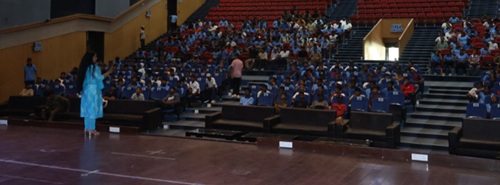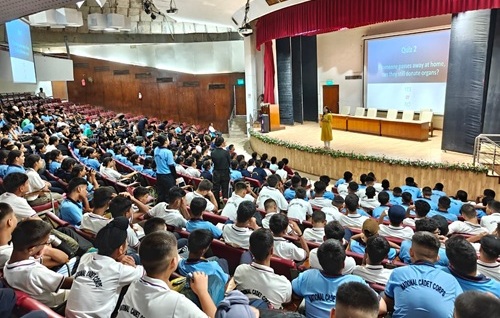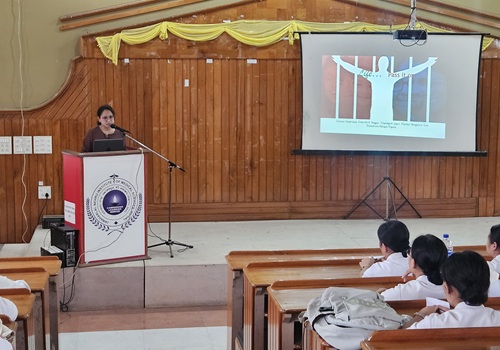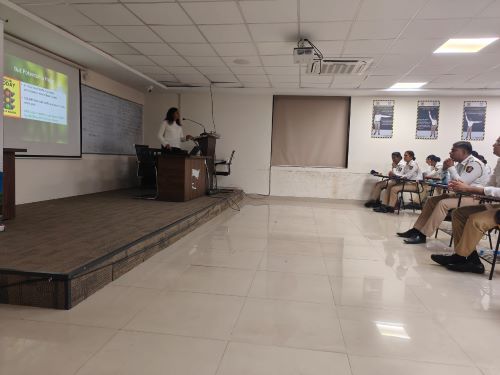
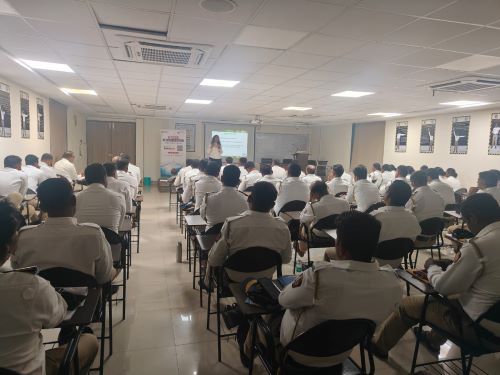
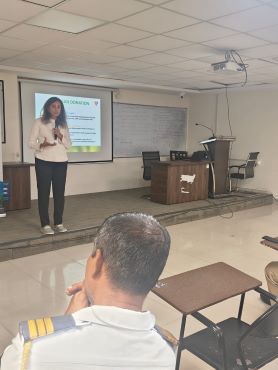
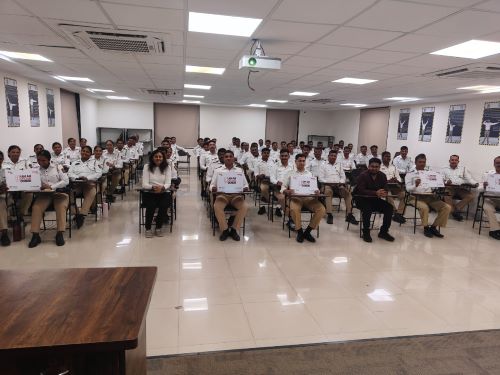
On November 28, 2025, an organ donation awareness session was organized at the Traffic Training Institute, Byculla, exclusively for the Mumbai Traffic Police personnel. The objective of the program was to enhance understanding of organ donation among officers who play a crucial role in emergency medical movement and Green Corridor facilitation. A total of 100 Traffic Police officers attended the session. The event was well supported by the institute’s administrative team.
The session was conducted by Ms. Jaya Jairam from MOHAN Foundation, while Ms. Sakshi Kshirsagar and Mr. Nikhil from MOHAN Foundation were also present to support the program.
Ms. Jaya opened the session by introducing MOHAN Foundation and its mission to promote ethical and transparent organ donation across the country. She discussed the foundation’s major initiatives, awareness activities, and its commitment to strengthening India’s organ donation ecosystem.
To initiate the conversation, she asked officers about their existing understanding of organ donation and then explained the basics—what organ donation means, who can donate, and who receives the organs. She emphasized how one donor can save and enhance multiple lives.
Ms. Jaya then discussed the difference between living donation and deceased donation, the importance of family consent, and the authorization procedures involved in living organ donation. She clearly explained the legal guidelines and protocols that ensure safety and accountability.
Officers were introduced to the concepts of cardiac death and brain stem death. Ms. Jaya explained how cardiac death occurs and the tissues that can be donated in such cases, such as corneas, skin, bones, and heart valves. She also spoke about the important role of eye banks and skin banks.
While explaining brain stem death, she clarified its medical criteria, the organs that can be donated, and the importance of timely coordination. Special emphasis was placed on the creation of a Green Corridor, highlighting how the Traffic Police play a crucial role by enabling swift and uninterrupted organ transport—directly contributing to saving lives.
In the concluding part, she discussed the THOA Act, the role of ZTCC, the patient waiting list, and the organ donation scenario in India.
An interactive discussion followed, where officers raised several thoughtful questions. Key queries included:
1. How can a person register to become an organ donor?
2. Can a person donate organs if they have certain medical conditions?
The session concluded with a discussion on myths versus facts, reinforcing the need for awareness and communication within families regarding organ donation.
Overall, it was an informative and engaging session. The Traffic Police officers showed strong interest, especially in understanding their critical role in Green Corridor operations, and expressed commitment toward supporting the noble cause of organ donation.















































-ACT,-2011.gif)