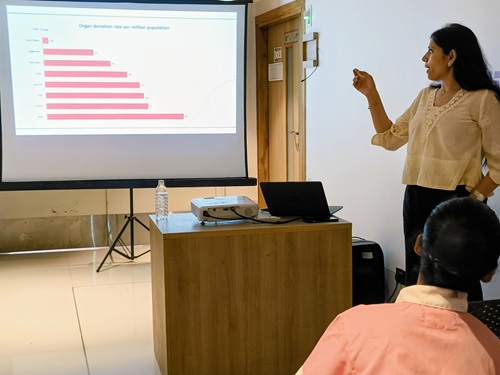
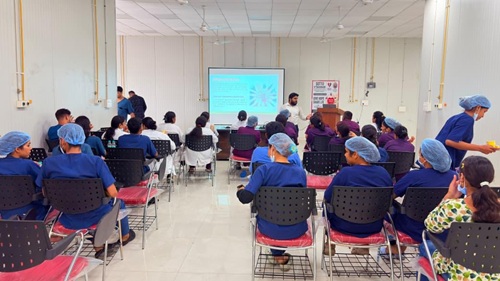
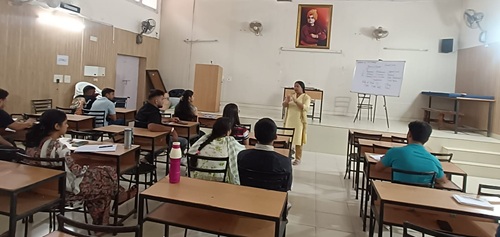
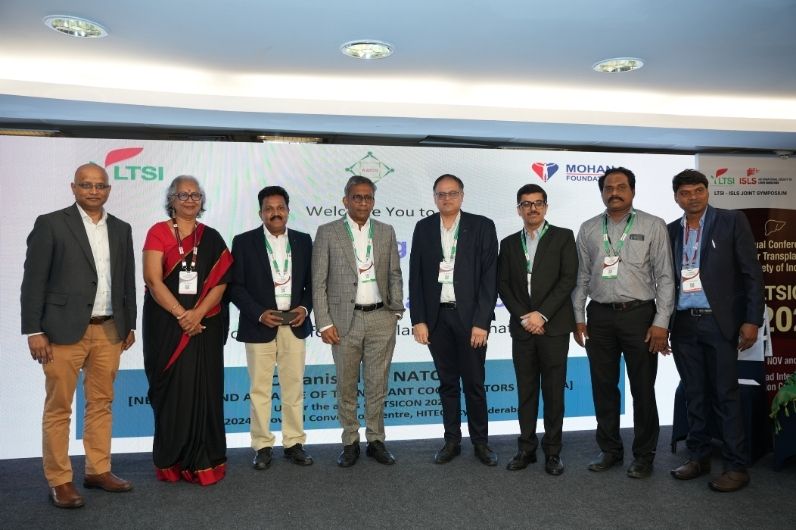
The 'Transplant Coordination Professional Certificate', a six-week online course hosted by the MOHAN Foundation from January February 2026 was recently completed with success. The six-week online course commenced on January 6, 2026 with 129 candidates signed up for the course (126 from India and 1 from Kenya, 1 from Tanzania and 1 from UAE).
The key elements of the course included access to the e-learning platform with online modules and resources, online assignments and assessments to reinforce learning, and weekly interactive webinars featuring professionals in organ donation and transplantation.
The session included essential information on deceased and living organ donation, including related and unrelated donors. It also included information on processes such as Donation after Circulatory Death (DCD) and Donation after Brainstem Death (DBD). The participants were also introduced to various transplant such as split liver transplantation, swap transplantation, and domino transplantation. Information on the process of consent, including India’s opt-in system, the significance of donor cards, and the significance of family discussions regarding deceased organ donation was also provided.
The session gave participants a brief understanding of the rules that guide organ donation and transplantation in India. It explained how brain death is declared, how approvals are obtained for related and unrelated living donors, and what hospitals must do to stay registered. The discussion also covered the step-by-step procedures and documentation required for both brainstem death and living donations.
The speaker discussed the concept of brainstem death, diagnosing and certifying brain death, the pathophysiology and maintaining deceased donor in ICU, and conducting the confirmatory test. He also emphasized the importance of legal requirements and documentation in certifying brainstem death.
The process involved in deceased organ donation, including the required documentation and procedures followed in medico-legal cases, were explained. Additionally, case studies were discussed to highlight and address key challenges in the process.
The speaker emphasized on role of care, sensitivity, and compassion during organ donation counselling, which needs to happen within brief time limits but requires professionals to understand how the family experiences grief. The session included a detailed introduction to the stages of grief based on the Kubler-Ross model and how no two families undergo the same journey of grief.
The components of medical ethics-beneficence, non-maleficence, transference, justice, confidentiality, and autonomy, were discussed with the participants. Case studies were shared as part of the session, and participants were encouraged to apply these ethical principles and share their perspectives on each scenario.
Mr. Vyas outlined key aspects of living donor transplants, emphasizing thorough medical and psychological assessments, ethical considerations, and the roles of transplant coordinators. He highlighted the importance of follow-up for donor recovery and recipients, including monitoring rejection and medication side effects, supported by case studies.
The session focussed on all the legal procedures which apply to living donor transplantation. The talk briefed the list and importance of documentation involved in different types of living donor transplant program both national and international. The essential requirements according to the Transplantation of Human Organs and Tissues Act, 2011 (THOTA) were discussed in detail along with the role of transplant coordinators facilitating the process.
The session focused on preparing patients in advance for a donor call, coordinating with patients and in-house teams, the State body, and the donor hospital, and managing retrieval and transplant surgery. It also focussed on logistics like air transport and green corridors, including Metro service, to ensure timely organ delivery for transplantation, and communication with the recipient’s family, providing periodic updates.
An online examination was conducted on February 18th and reattempt on February 28th 2026, and candidates were awarded course completion certificates (CPD accredited) upon successfully passing the exam.
Feedback
John Kennedy (⭐⭐⭐⭐⭐)
Sudha Saseendran Siddha Medical College and Hospital, Kanyakumari, Tamil Nadu
Overall, the training/webinar was well-organised, professionally conducted, and extremely informative. The speakers delivered the content clearly and effectively, and the session fully met expectations by providing valuable insights. Most importantly, it empowered post-kidney transplant patients like me with greater knowledge and confidence to support and guide others who may need encouragement. Thank you for organising such a meaningful and impactful session.
Chanthu Manisseril (⭐⭐⭐⭐⭐)
The Nairobiwest Hospital ltd, Kenya
Hai this is Chanthu. I successfully completed the online transplant coordination course conducted by MOHAN Foundation and I attended from Kenya. The course was well structured, informative and very useful for health care professionals. The sessions were clear and easy to understand. I gained very good knowledge about Orgon donation procedures, legal aspects, and coordination responsibilities. Even though I joined from Kenya, the online section were smooth and accessible. The faculty and organizing team were supportive and knowledgeable. This course has enhanced my confidence and understanding in transplant coordination. I sincerely Thank the entire team and MOHAN Foundation for this valuable learning opportunity.
Tarandeep Kaur (⭐⭐⭐⭐⭐)
Max Super Speciality Hospital, Ghaziabad, Uttar Pradesh
The course was comprehensive, informative, and professionally designed. It added great value to my knowledge in organ transplant. I am truly grateful to the faculty members for their dedication, patience, and for sharing their valuable knowledge and real-life experiences.






































-ACT,-2011.gif)