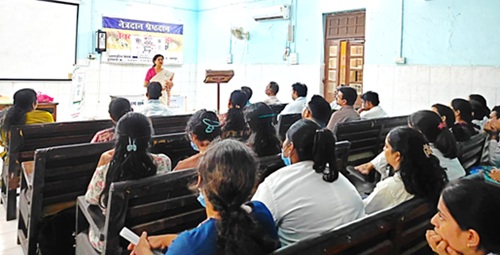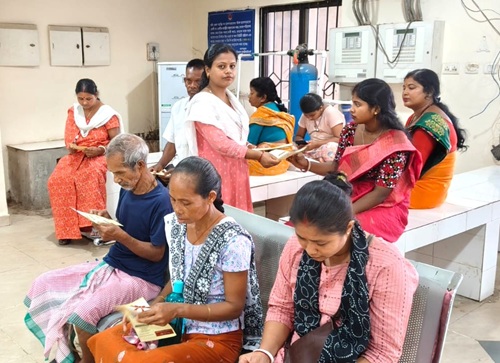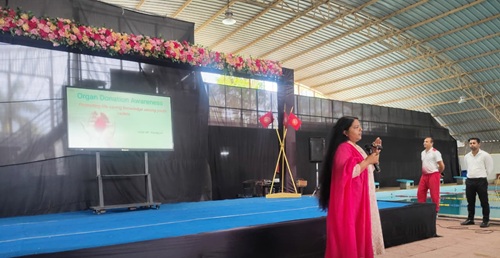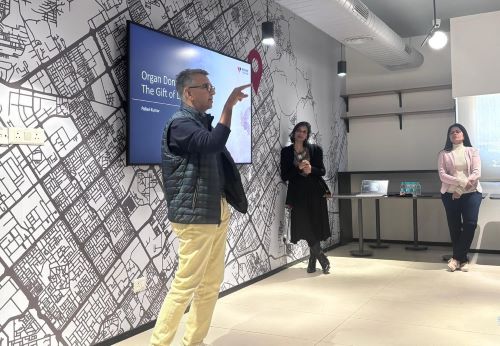
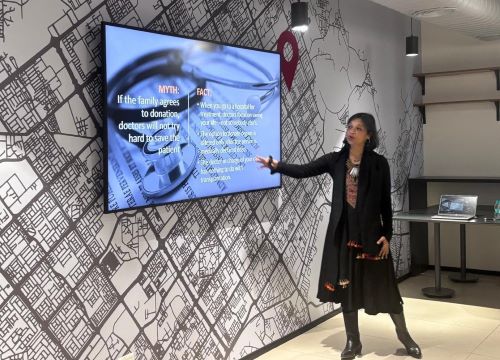
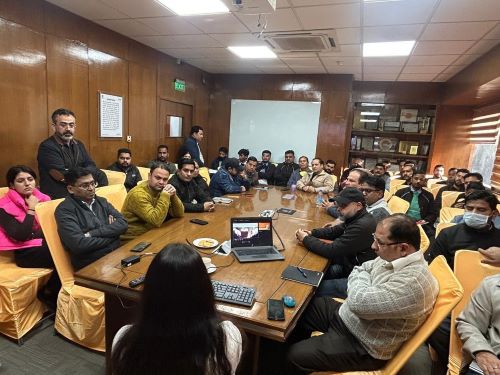
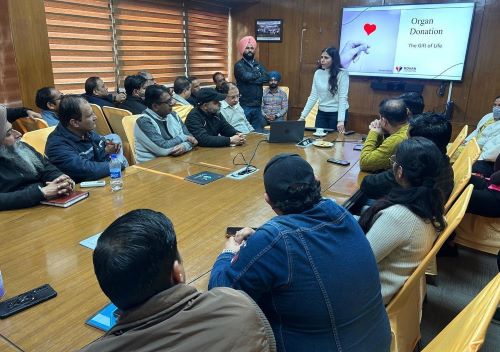
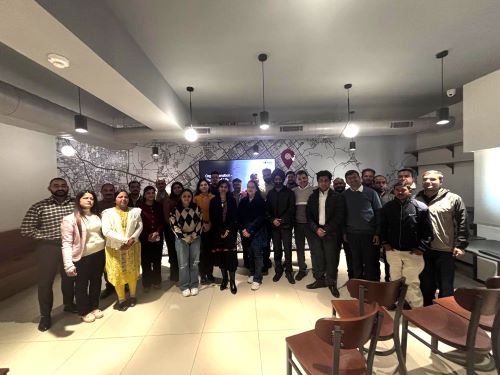
On January 22 and 23, 2026, MOHAN Foundation NCR conducted five organ donation awareness sessions for employees of Kamla Dials and Devices Limited (KDDL) across five locations: the Corporate Office in Chandigarh, Packaging Division in Panchkula, Dials Division in Derabassi, Dials Division in Parwanoo, and Packaging Division in Parwanoo.
The sessions were organized by Mr. Yashovardhan Saboo, Chairman and Managing Director, KDDL, and coordinated by Ms. Rajendri Sharma from the Human Resources team.
Ms. Pallavi Kumar, Executive Director, MOHAN Foundation NCR, and Ms. Simran Anand, Programme Officer, MOHAN Foundation NCR, served as the resource persons for the sessions. Over the two-day programme, three sessions were conducted by Ms. Pallavi Kumar and two by Ms. Simran Anand.
Ms. Pallavi Kumar led the first session by assessing participants’ existing knowledge and addressing common misconceptions related to organ donation. She explained the fundamental concepts of organ donation using a PowerPoint presentation and a short educational film on brain death. She also shared an overview of the current organ donation scenario in India.
The sessions covered key topics, including:
• The need for organ donation
• Status of organ donation in India
• Organs that can be donated during life and after death
• Transplantation law in India
• Brain death and cornea donation
• Contraindications to organ donation
• Role of MOHAN Foundation
• Role of the public in spreading awareness
• Myths and facts surrounding organ donation
• Causes of brain death and the difference between brain death and coma
Ms. Pallavi highlighted that India ranks third globally in living organ donations. The sessions were highly interactive, with participants actively engaging through questions and discussions.
During the first session at the Corporate Office, participants raised an important question regarding whether it is possible to choose or prioritize the recipient of an organ once a donor is identified. Ms. Pallavi clarified that personal selection or prioritization of recipients is not permitted. Organ allocation in India follows a transparent and regulated waiting and matching system managed by authorized government bodies such as National Organ and Tissue Transplant Organization (NOTTO) and the respective State Organ and Tissue Transplant Organizations (SOTTOs). Allocation is based on medical urgency, compatibility, waiting time, and other clinical criteria to ensure fairness and equity. She further emphasized that these protocols operate under strict legal guidelines to prevent bias, misuse, and inequality in organ distribution.
Additional questions raised by participants included:
• What is the time limit (window period) for retrieval of different organs after death?
• Is there any government policy that provides financial support to donor families facing economic constraints?
• Is brain donation also possible?
At the conclusion of the first session, Mr. Saboo appreciated the efforts of the MOHAN Foundation team and encouraged employees to reflect on the life-saving impact of organ donation. To express his support for the cause, he recited a couplet by Rahim:
“देनहार कोई और है, देवत है दिन रैन। लोग भरम हम पर करें, याते नीचे नैन॥”
He explained its meaning, stating that the true Giver is God, who gives continuously day and night, yet people often mistakenly credit human beings, which is why one should always remain humble.
Mr. Saboo also invited his personal assistant to share his experience of pledging for organ donation, which further inspired the participants.
Nearly 200 employees attended the awareness sessions across all five locations.










































-ACT,-2011.gif)