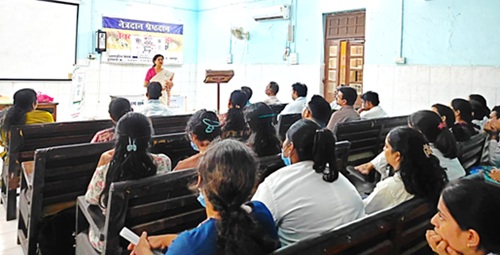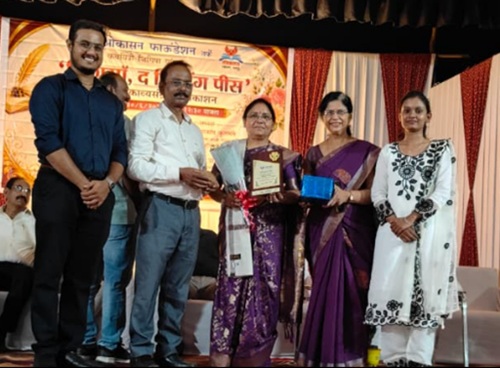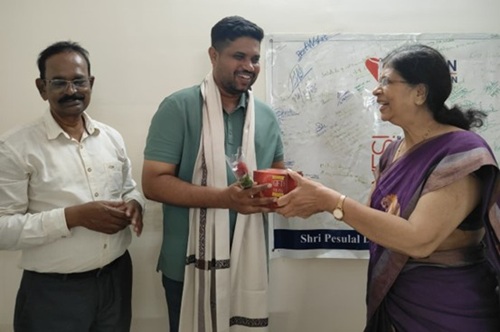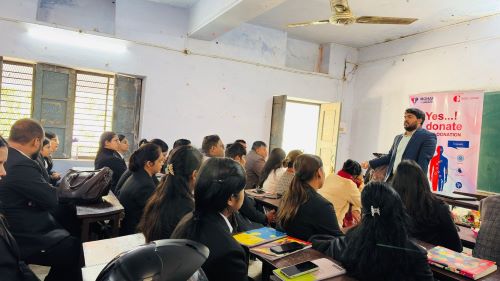
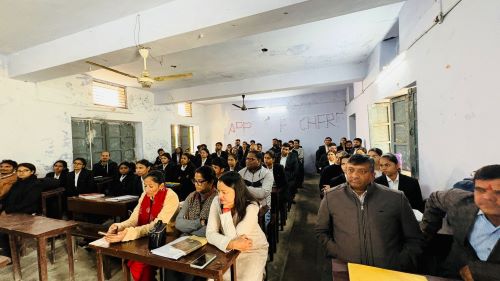
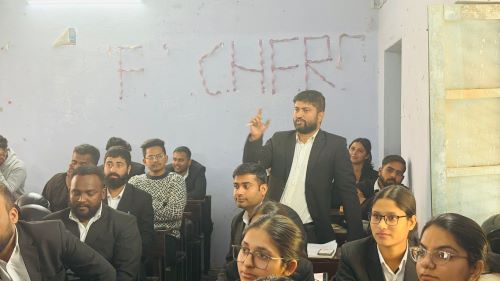
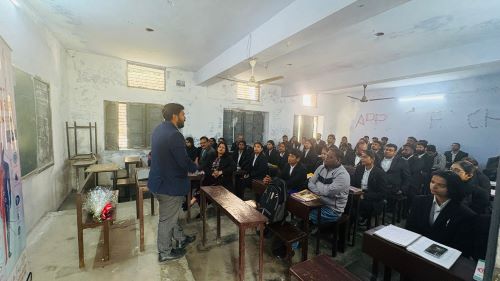
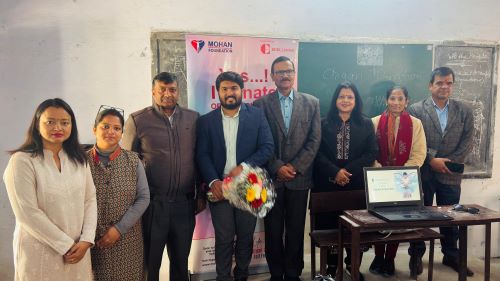
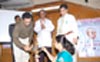
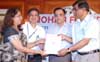
On December 01, 2025, MOHAN Foundation conducted an awareness session on organ donation at Department of Law, DAV PG College, Dehradun. The session was organized at the invitation of Dr. Parul Dixit, HOD, Department of Law, DAV PG College, Dehradun.
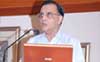
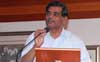
Mr. Sanchit Arora, Project Leader – MOHAN Foundation, posted at AIIMS Rishikesh, served as the resource speaker for the session, accompanied by Mr. Arun Sharma, Program Executive, MF Uttarakhand. The program was attended by the faculty and students of the Law Department.
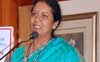
The session commenced with a welcome address by Dr. Parul Dixit, who emphasized the critical need for organ donation and highlighted the existing lack of awareness on the subject. She underscored the urgency of engaging with this issue, particularly in the context of shaping perspectives as future lawyers.
Addressing the audience next, Mr. Sanchit invited participants to share their current understanding of organ donation, creating an interactive and open environment. He then delivered a comprehensive presentation covering key aspects of organ donation, including:
• What organ donation is and its importance
• Who can be an organ donor
• Living and deceased donation
• Organ donation during life and after death
• Brain death and how it differs from coma
• Eye donation, skin donation, and corneal preservation after death
• The Transplantation of Human Organs Act (THOA), 1994
• Living kidney transplantation facility at AIIMS Rishikesh
• Myths and facts about organ donation
• Ways individuals can contribute to this noble cause
• Goals and objectives of MOHAN Foundation and the Anudaan initiative
Mr. Sanchit concluded the session by highlighting the urgent need for organ donation in India and encouraged students and staff to discuss the subject with their families, friends, and colleagues before pledging.
Following the presentation, participants raised several queries, such as:
• How the compatibility in tissue transplant is checked?
• How can anyone donate tissues after natural death?
• Is brain death and apnea test are included in THOA, 1994?
• Can cancer patients donate their organs?
• Can organs only be transplanted to the same age group?
• What’s the organ viability time after brain death?
• How are transplant waiting lists managed?
• Is the transplant waiting list available for public?
• If the organ is available, but the patient waiting next line is not, what happens to the organ?
• Why hospitals deny registering patients for transplant waiting list?
• Why recipient is charged heavily for transplants, while donors are not paid anything?
• Are there any incentives given to donor families by the government?
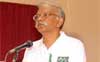
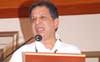
The program concluded with closing remarks by Dr. RK Dubey, Department of Law, who expressed gratitude to the MOHAN Foundation and the participants for their meaningful contributions. He emphasized that while anyone can donate eyes, as lawyers there is scope to engage more deeply with this cause, explore opportunities within the Transplantation of Human Organs Act (THOA) 1994 and contribute to meaningful change through the legal profession.
Students appreciated the efforts of MOHAN Foundation and expressed their willingness to discuss organ donation with their families.
Following the session, Ms. Himani Bisht, student at the Department of Law, volunteered to organize an awareness program within the NGO, where she is actively engaged and to help increase the awareness for the noble cause.
The session was attended by nearly 70 participants, and 1 participant pledged to donate their corneas through the NOTTO website and motivated others to pledge for this cause too.

























-ACT,-2011.gif)