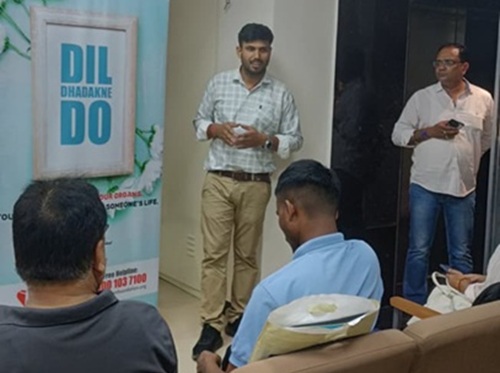
The 'Transplant Coordination Professional Certificate', a six-week online course, accredited by the CPD Standards Office with 100 CPD hours was hosted by the MOHAN Foundation. The batch May-June 2026 which commenced on May 6, 2026 invited registrations from 121 candidates (116 from India, 4 from Bangladesh and 1 from Myanmar). The key elements of the course included access to the e-learning platform with study materials and resources, online assignments and assessments to reinforce learning, and weekly interactive webinars featuring professionals in organ donation and transplantation.
The session provided participants with a comprehensive introduction to the fundamentals of organ donation and transplantation. It covered living donation, including both related and unrelated donors, deceased organ donation, tissue donation, Donation after Circulatory Death (DCD), and Donation after Brainstem Death (DBD). Participants were also introduced to advanced transplant procedures such as split, swap, and domino transplantation. The session concluded with an overview of global consent systems, India's opt-in model, and the importance of donor pledging, donor cards, and family discussions in supporting informed donation decisions.
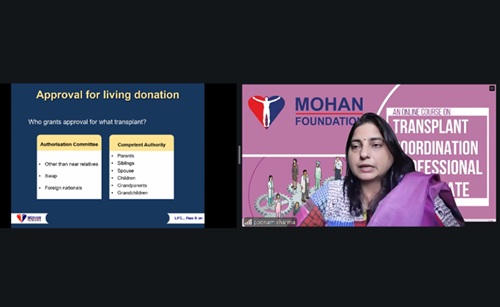
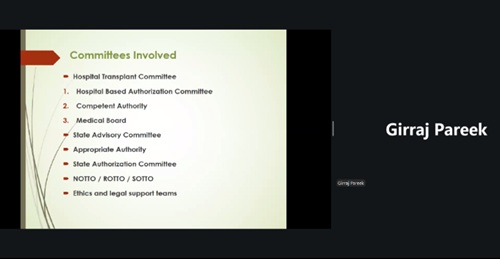
This session provided participants with an overview of the legal framework governing organ donation and transplantation in India. Key provisions of the Transplantation of Human Organs and Tissues Act (THOTA) and the associated Rules were discussed, with emphasis on brainstem death certification, living donation approvals for both related and unrelated donors, hospital registration requirements, and ethical practices in organ donation. The session also explained the roles and responsibilities of the Appropriate Authority, Authorization Committee, and Brainstem Death Certification Committee, while highlighting the documentation and regulatory processes essential for compliant transplant practice.
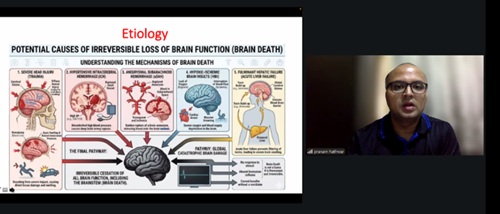
The session focused on the identification and certification of brainstem death, covering the essential preconditions, apnoea testing, and ancillary investigations. Dr. Hathwar explained the physiology of brainstem death, principles of donor management, and the documentation required for certification. The discussion also addressed the importance of medical management of brainstem dead donor, contraindications, paediatric donor considerations, and the legal responsibilities associated with brainstem death determination.
The session provided an overview of the deceased organ donation pathway, outlining the coordination processes, essential documentation, and procedures followed in medico-legal cases. Through real-life case studies, participants explored common operational challenges and discussed practical approaches to managing complex situations encountered during deceased donor coordination.
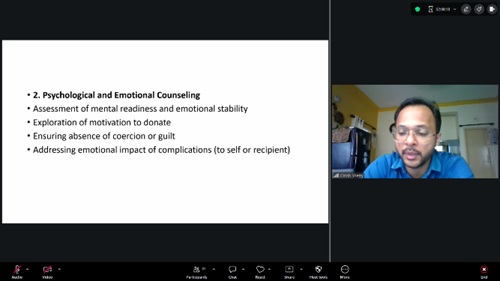
The session examined the multidisciplinary evaluation of living donors, highlighting the importance of comprehensive medical and psychosocial assessments before organ donation. Key topics included donor safety, ethical considerations, risk assessment, and the transplant coordinator's role in ensuring that the evaluation process is thorough, transparent, and patient-centred.
This lecture focused on the legal and administrative aspects of living donor transplantation. Participants gained an understanding of the documentation required, verification of donor-recipient relationships, statutory approval processes, and the responsibilities of transplant coordinators in ensuring compliance with legal and regulatory requirements throughout the transplant pathway.
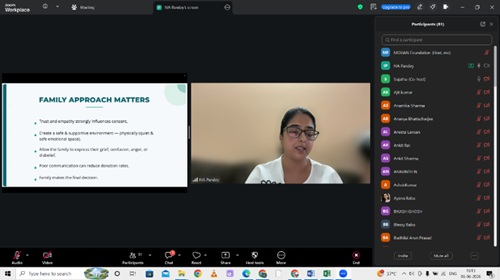
This session highlighted the importance of compassionate, structured communication when supporting families and approaching them for organ donation. Drawing on the Kübler-Ross model of grief, the speaker explained how families experience and express grief differently, underscoring the need for individualized counselling. Practical guidance on effective communication, including key dos and don'ts, was shared, with particular emphasis on building trust, providing emotional support, and fostering informed decision-making rather than simply seeking consent.
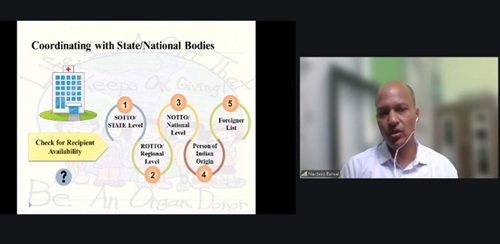
The session outlined the recipient coordinator's role in managing a donor call, from preparing transplant candidates in advance to coordinating with recipient families, donor hospitals, state authorities, and multidisciplinary clinical teams. It also highlighted the logistical aspects of organ retrieval and transportation, including green corridors and air transport, to facilitate timely transplantation. The importance of clear communication and regular updates to recipient families throughout the transplant process was also emphasized.
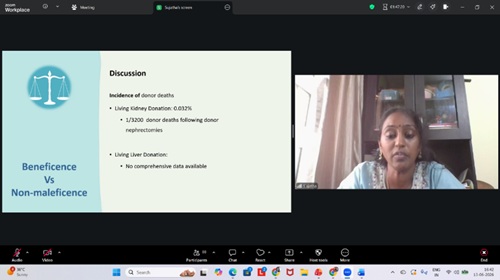
Participants explored the ethical principles that underpin organ donation and transplantation, including beneficence, non-maleficence, justice, autonomy, confidentiality, and equity. Interactive case discussions encouraged participants to apply these principles to real-world scenarios, promoting critical thinking and ethical decision-making in transplant practice.
An online proctored examination was conducted on 20 June 2026, with a reattempt opportunity provided on 30 June 2026. Participants who successfully passed the examination by securing a minimum score of 60% were awarded a CPD-accredited Course Completion Certificate.
Feedback
Sedekieno Rino (⭐⭐⭐⭐)
MOHAN Foundation, Programme Executive, Nagaland
Overall, I found the course very informative, comprehensive, and beneficial in enhancing my understanding of organ donation and transplantation. The sessions covered most of the important topics effectively, and the resource persons explained the concepts in a clear and engaging manner. The course was a valuable and enriching learning experience, and I sincerely appreciate the efforts of the organizers and speakers.
Ayana Babu (⭐⭐⭐⭐⭐)
Amrita Institute of Medical Sciences and Hospital, Kerala
They covered the important topics well. However, I wish they had also covered the transplantation of individual organs and tissues in greater detail. While going through the modules on my own, I found some of the lectures by the doctors difficult to understand because of the technical terminology. However, the faculty members were very helpful, and whenever we had any doubts, they clarified them promptly.













































-ACT,-2011.gif)