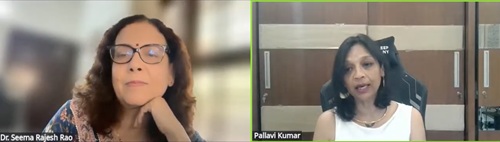
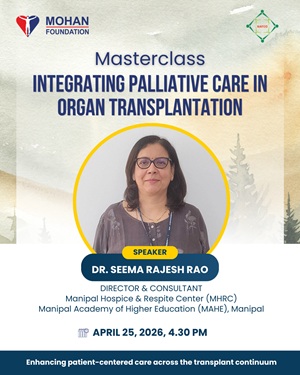
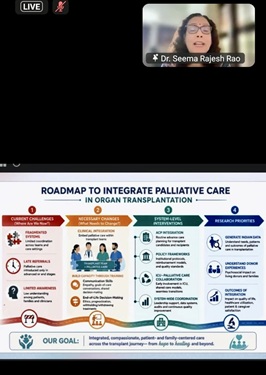
MOHAN Foundation in collaboration with NATCO organized an online masterclass titled “Integrating Palliative Care in Organ Transplantation,” on April 25, 2026, for NATCO members and MOHAN Foundation team members. The Masterclass focussed on strengthening a holistic and patient-centered approach to transplant care.
Ms. Pallavi Kumar, Executive Director of MOHAN Foundation NCR, welcomed the participants and introduced the speaker, Dr. Seema Rajesh Rao, Director & Consultant in Palliative Medicine, Manipal Hospice and Respite Center (MHRC), Manipal Academy of Higher Education, Manipal.
The masterclass aimed to enable participants to understand the importance of integrating palliative care across the transplant continuum, to recognize the multidimensional needs of patients and families, and to build confidence in delivering compassionate and comprehensive care.
Dr. Rao highlighted that while transplantation is often viewed as the pinnacle of modern medicine, it is not a final cure for suffering but rather transforms the nature of challenges faced by patients. She emphasized that suffering persists across all stages, before, during, and after transplantation, and requires continuous support.
Through case-based discussions, including that of a post-transplant patient, Lakshmi, she illustrated that even after a “successful” transplant, patients continue to face fatigue, infection risks, medication side effects, and significant psychological distress, including anxiety and fear of organ rejection. She also pointed out that patients on transplant waiting lists often experience symptom burdens such as pain, breathlessness, and nausea comparable to those seen in terminal illnesses like cancer.
Dr. Rao clarified that palliative care is specialized medical care for individuals with life-limiting illnesses, regardless of the stage of disease or prognosis. She emphasized that it should begin at diagnosis and be provided alongside curative treatments, rather than being limited to end-of-life care.
She further explained that suffering is multidimensional, encompassing physical, psychological, social, spiritual, practical, and ethical aspects. Effective care must address all these dimensions, including end-of-life care and bereavement support. She stressed that holistic care, not just medical treatment, is essential to improve patient outcomes and experiences.
The session also highlighted the importance of integrating palliative care within transplant teams. Early integration improves quality of life, enhances patient satisfaction, supports better symptom management, and aids in informed decision-making. Dr. Rao emphasized that the ultimate goal of healthcare should not only be to prolong life but also to improve the quality and dignity of life.
Addressing the donor perspective, she noted that for successful organ donation, “death must happen well,” ensuring dignity, comfort, and appropriate care for donors and their families. She also underscored the importance of Advance Care Planning (ACP), where early documentation of patient preferences helps reduce family conflict and ensures that patient values and legacy are respected.
Dr. Rao emphasized the critical role of multidisciplinary teamwork in achieving effective integration. She highlighted that collaboration among doctors, nurses, transplant coordinators, psychologists, and other healthcare professionals is essential to deliver comprehensive care.
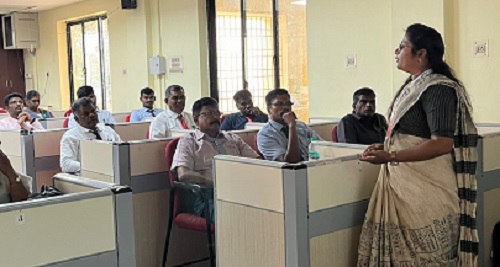
Participants actively engaged in the session and raised questions on topics such as the role of transplant coordinators in initiating palliative care, managing patients who are not eligible for transplantation, availability of services, caregiver support, and handling emotional burnout among healthcare professionals. Dr. Rao addressed these queries in detail and emphasized the importance of awareness, communication, and self-care among healthcare providers.
Close to 60 participants attended the session, which provided valuable insights into the integration of palliative care in organ transplantation. The session reinforced that palliative care supports both patients and families throughout the illness journey and that true success in healthcare lies in “adding life to days, not just days to life.”



























































-ACT,-2011.gif)