Highlights:
- India has crossed 5 lakh organ donation pledges through awareness campaigns and digital reforms
- One deceased donor can save up to eight lives through organ transplantation
- Experts say improving donor conversion and transplant infrastructure remains the next challenge
India's
organ donation movement has reached a landmark milestone, with
more than 5 lakh citizens formally pledging to donate their organs and tissues after death, according to the Ministry of Health and Family Welfare ().
Announced by the National Organ and Tissue Transplant Organization (NOTTO), the achievement reflects growing public awareness and participation in a cause that has gained national attention through government campaigns, digital reforms, and repeated appeals by Prime Minister Narendra Modi ().
While the milestone highlights increasing social acceptance of organ donation, health experts note that
India still faces a substantial gap between the number of patients waiting for transplants and the availability of donor organs.
Recognizing this challenge, the government has simultaneously been working on a broad reform agenda covering technology, legislation, infrastructure, transparency, and transplant accessibility under the National Organ Transplant Program (NOTP).
India's Organ Donation Movement Reaches a New Milestone
According to the Press Information Bureau (PIB) release issued on June 22, 2026, India has crossed 5 lakh organ donation pledges, reflecting rising awareness, compassion, and collective commitment toward organ and tissue donation.
Dr. Anil Kumar, Director of NOTTO, thanked citizens, healthcare professionals, NGOs, educational institutions, media organizations, state governments, and Union Territories for their contributions to awareness generation and public participation.
The Ministry of Health and Family Welfare stated that the achievement represents an important step toward
addressing the country's growing need for organs and tissues while strengthening ethical, equitable, transparent, and patient-centric transplantation systems.
The ministry emphasized that the government remains committed to reducing the gap between the demand for and availability of organs through the following:
- Sustained awareness campaigns
- Expansion of transplantation infrastructure
- Strengthening institutional capacity
- Improved transplant coordination systems
- Transparent organ allocation mechanisms
How Citizens Can Pledge to Become Organ Donors
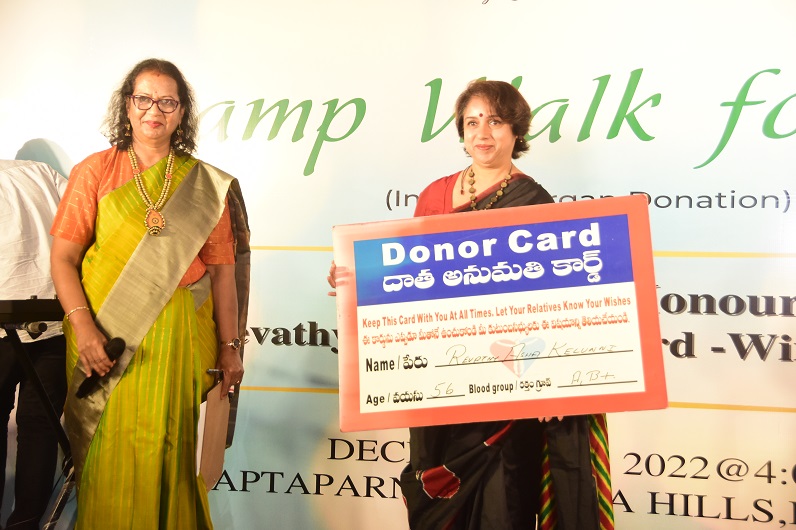
According to AIIMS and ORBO (Organ Retrieval Banking Organization), individuals can pledge organ donation during their lifetime, while family members may also authorize donation after death.
To register:
- Visit the national portal at notto.abdm.gov.in.
- Complete the organ donation pledge form.
- Obtain signatures from two witnesses, including a close family member where applicable.
- Submit the registration online.
- Receive an organ donor card and registration number.
- Inform family members about the decision so that your wishes are known and respected.
Health authorities stress that discussing the decision with family members remains one of the most important steps in ensuring successful organ donation.
Why Organ Donation Matters in India
India continues to face a severe shortage of donor organs despite major progress in transplantation services.
According to the Ministry of Health and Family Welfare Annual Report 2024-25, the number of organ transplants in India increased from
4,990 in 2013 to 18,378 in 2023 and further to 18,911 in 2024. ()
India is now the
third-highest country globally in total organ transplants and ranks first worldwide in living donor organ transplantation. However, the organ donation rate remains below
one donor per million population, far behind Spain's approximately 48 donors per million population.
The ministry notes that with nearly
1.73 lakh road traffic accident deaths annually, there exists a substantial pool of potential deceased organ donors. Yet many transplantable organs are never utilized because deceased donation rates remain low.
According to the Organ India awareness network, India requires nearly 5 lakh organs annually, yet only about
2-3% of this demand is currently met. The organization estimates that nearl
y 1.5 lakh brain stem deaths occur each year due to accidents alone, highlighting the enormous untapped potential for deceased organ donation ().
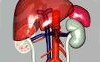
Prime Minister Narendra Modi has repeatedly highlighted this issue through Mann Ki Baat, emphasizing that a single deceased donor can save up to eight lives by donating organs such as the heart, liver, kidneys, lungs, pancreas, and intestine, while also helping many more people through tissue donation.
Government Reforms Driving India's Organ Donation Ecosystem
During the Chintan Shivir on "Reforms Required for Augmentation of Organ and Tissue Donation and Transplantation in Terms of Technology, Processes, and Legislation in India" held on August 30, 2024, senior health officials outlined a comprehensive roadmap for strengthening India's organ donation framework ().
Additional Secretary (Health) L.S. Changsan stated that organ donation must become "a way of life" and emphasized the need to expand deceased organ donation to address the country's growing burden of organ failure.
She highlighted that the government has adopted a
"One Nation, One Policy" approach and initiated consultations with states to improve organ donation and transplantation systems across the country. The focus areas include:
- Expanding transplant infrastructure
- Increasing trained manpower
- Improving access in government institutions
- Enhancing transparency and equity
- Strengthening public awareness campaigns
The government has also launched Angdaan Jan Jagrukta Abhiyaan, a nationwide awareness campaign being implemented across states and institutions. According to DGHS Dr. Atul Goel, India has a long tradition of altruism, but there is a pressing need to encourage deceased organ donation in both public and private hospitals.
How the Aadhaar-Based Portal Is Transforming Organ Donation Registration
One of the most significant reforms has been the launch of the
Aadhaar-linked national organ donation pledge portal, notto.abdm.gov.in, on September 17, 2023.
While crossing 5 lakh pledges marks a major awareness milestone, a pledge is only the first step in the organ donation journey.
Information published by Organ India highlights that successful transplantation depends on several critical stages, including family consent, medical certification, organ retrieval, recipient matching, and timely transplantation.
Understanding this pathway helps explain why increasing pledges alone may not automatically translate into more transplants.
|
From Organ Donation Pledge to Life-Saving Transplant: How the Process Works in India
|
|
Stage
|
What Happens
|
Why It Matters
|
|
Organ Donation Pledge
|
An individual registers as an organ donor through the national portal or an authorized organization.
|
Creates a record of the donor's willingness to donate organs and tissues after death.
|
|
Family Awareness and Consent
|
Family members are informed about the donor's decision and may be approached for consent when donation becomes possible.
|
Family cooperation remains one of the most important factors in successful deceased organ donation.
|
|
Brain-Stem Death Certification
|
A team of authorized doctors certifies brain-stem death according to legal requirements under THOTA.
|
Organ donation after death in India largely depends on brain-stem death certification.
|
|
Organ Retrieval
|
Specialized medical teams retrieve viable organs and tissues from the donor in a hospital setting.
|
Organs must be removed quickly and preserved appropriately to remain suitable for transplantation.
|
|
Recipient Identification
|
Suitable recipients are identified through waiting lists and allocation systems.
|
Ensures fair, transparent, and medically appropriate organ allocation.
|
|
Transplant Surgery
|
Organs are transported to transplant centres and implanted into recipients.
|
Provides life-saving treatment for patients with end-stage organ failure.
|
|
Post-Donation Impact
|
One deceased donor can save up to eight lives through organ transplantation and improve many more through tissue donation.
|
Demonstrates the life-changing impact of a single donor's decision.
|
What Experts Say Still Needs Improvement
Although awareness and pledges are rising, experts argue that India's biggest challenge is converting potential donors into actual transplants.
According to the Observer Research Foundation report "Consent Without Capacity: Structural Hurdles in India's Organ Donation Ecosystem," the main barriers are
often systemic rather than social ().
The report identifies legal ambiguities around brain-stem death certification, insufficient transplant infrastructure, workforce shortages, incomplete reporting systems, and limited utilization of deceased donor pathways as key obstacles preventing many medically eligible donations from becoming successful transplants.
The report argues that improving hospital readiness, organ retrieval networks, digital certification systems, transplant coordination, and legal clarity will be essential if India hopes to substantially increase organ donation rates in the coming years.
References:- India Achieves Landmark Milestone of 5 Lakh Organ Donation Pledges - (https:www.pib.gov.in/PressReleasePage.aspx?PRID=2276810�=3&lang=1)
- Notto - (https:dghs.mohfw.gov.in/notto.php)
- Annual Report 2024-25 - (https:notto.mohfw.gov.in/WriteReadData/Portal/News/917_1_Annual_Report_2025.pdf)
- Organ Donation - Information, Process, Types, FAQs - (https:www.organindia.org/know-organ-donation/)
- Chintan Shivir on �Reforms required for augmentation of organ and tissue donation and transplantation in terms of Technology, Processes and Legislation in India� held by Union Health Ministry - (https:www.pib.gov.in/newsite/erelcontent.aspx?relid=259099�=48&lang=2)
- Consent Without Capacity: Structural Hurdles in India�s Organ Donation Ecosystem - (https:www.orfonline.org/research/consent-without-capacity-structural-hurdles-in-india-s-organ-donation-ecosystem)
Source-Medindia






















































-ACT,-2011.gif)