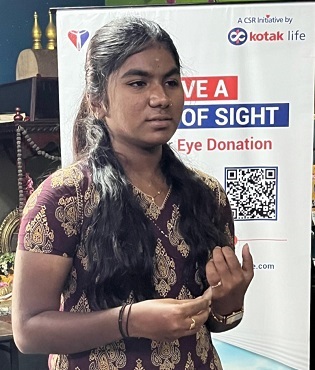
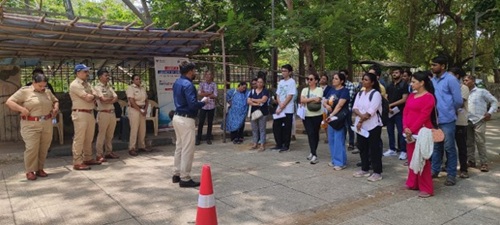
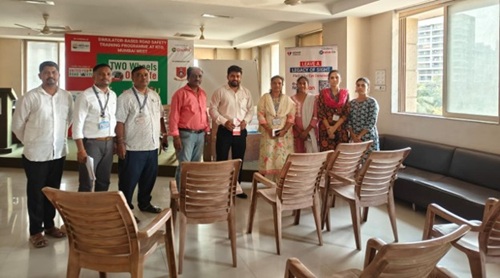
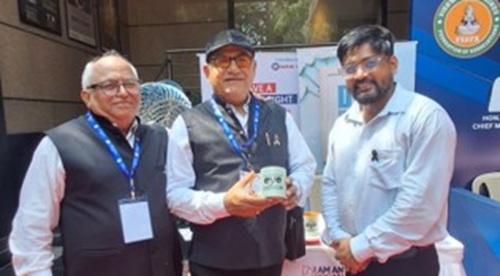
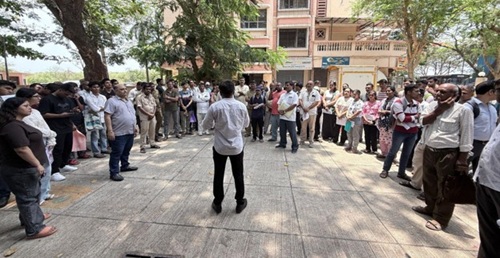
On June 24, 2026, MOHAN Foundation, in association with Naga Hospital Authority Kohima (NHAK), conducted an awareness session on organ and tissue donation at Ophthalmology Out Patient Department (OPD) as part of its ongoing public education and outreach initiatives. The session was conducted by Mr. Lirenthung N. Kithan, Project Lead, MOHAN Foundation, Nagaland, and attended by Ms. Sedekieno Rino, Programme Executive, MOHAN Foundation, Nagaland.
Mr. Lirenthung initiated the session by sharing the vision and mission of MOHAN Foundation and its interventions in Nagaland. Participants were informed that Naga Hospital Authority Kohima (NHAK) will soon begin the transplantation programme, which is expected to greatly benefit the people of the state. Emphasis was also laid on the establishment of an eye bank within the hospital, to facilitate eye donation and corneal transplantation.
The session briefly covered when organ donation can take place, who can become a donor, and the different organs and tissues that can be donated. A clear distinction between brain death and coma was also explained. Information was shared on the Transplantation of Human Organs and Tissues Act (THOTA), which strictly prohibits commercial trading of organs and imposes severe punishment on those who violate the law.
While speaking on eye donation, it was explained that the entire eye is not removed; rather, only the cornea, the transparent outermost layer of the eye, is retrieved. Participants were informed that corneal retrieval can be performed at home by a doctor or trained technician. Eye donation is possible only after a person passes away and is considered one of the simplest and most successful forms of transplantation. The cornea is a bloodless tissue that does not require blood group matching, and the transplantation procedure can also be completed within an hour.
Additionally, participants learned that individuals of any age can donate their eyes. Various myths and facts surrounding organ donation were also discussed to help clear misconceptions among the participants.
During the interaction session, one participant asked how many hours after death eye donation can take place. In response, it was shared that the eyes should ideally be donated within six hours after death. Families wishing to donate were advised to immediately inform the nearest eye bank and follow important measures such as switching off the fan, keeping the eyes moist, and slightly raising the head.
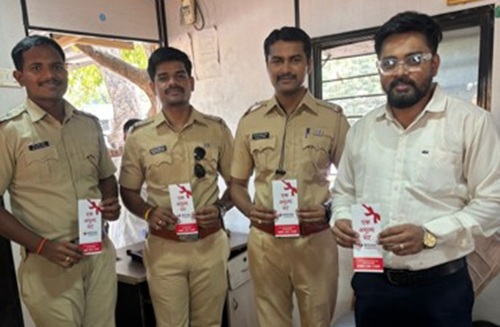
Ms. Sedekieno distributed informational brochures to the participants to enhance their understanding of organ and tissue donation and transplantation.
Close to 37 participants were reached through the session.
















































-ACT,-2011.gif)