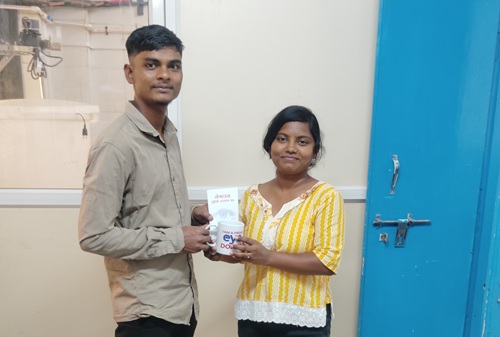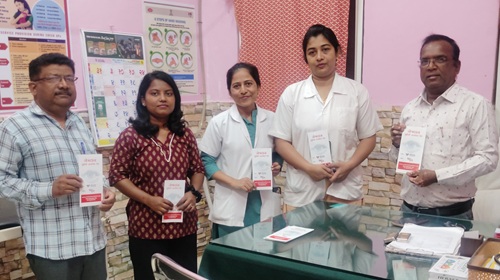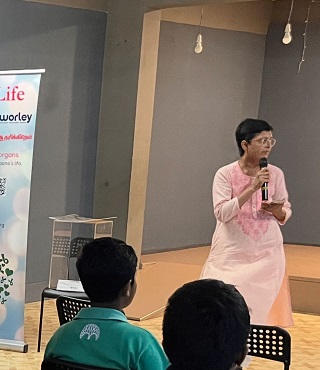
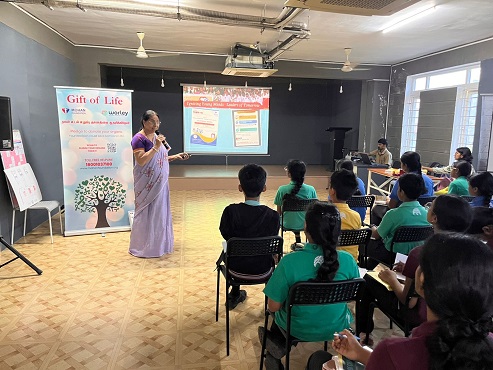
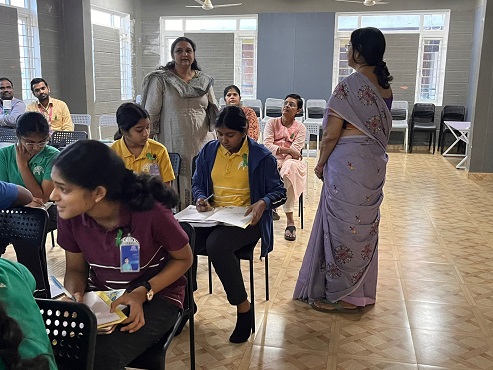
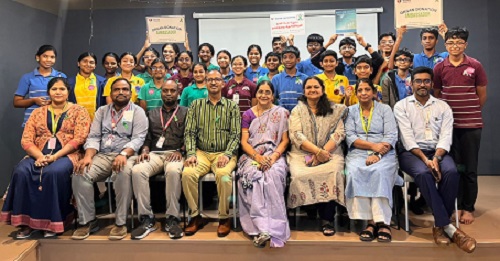
MOHAN Foundation conducted Organ Donation Ambassador training for 25 students of The Pupil International School on Dec 12, 2025. The workshop began with the Director, Dr Saveetha’s address, during which the team from MOHAN Foundation was introduced and presented with a small memento. She also spoke of the nature of work done by MOHAN Foundation. MOHAN Foundation was represented by Dr Hemal Kanvinde, Mr Ganesh C, Ms Kanishka and Ms Riya Singh.
The first activity was a Bingo game involving both students and teachers. Each participant received a bingo card, and organ-donation–related words were called out. With every word that was called out, a short discussion was held, and a few terms such as swap transplantation, grief counsellor’s role, and people involved in the organ donation process were explained in detail. This helped the students understand how organ donation works.
Dr. Hemal then delivered a session on creating awareness. She explained various ways students can spread the message on organ donation—through posters, street plays, presentations, social media content, and creative campaigns. Examples of previous student-led awareness activities were shown to help them visualise the possibilities.
The next session was a detailed question–answer session for both students and teachers. They were encouraged to think for a few minutes and list their doubts about organ donation and the Gift of Life course.
During the interactive question–answer session, students and teachers raised several thoughtful queries related to organ donation. They asked whether the brain can be donated after death and wanted to understand the psychological effects on a recipient after transplantation. Questions were also raised about the legal framework, such as why India cannot implement an opt-out organ donation system and why next-of-kin consent is required even after a person has pledged. Students were curious about medical aspects too, asking whether a person can stop taking immunosuppressant medication after some time, if the liver can be donated to multiple people, and whether paediatric patients can become donors. They also explored future-oriented topics, including technological developments in organ donation, whether artificial organs will affect organ donation in the future, and if grafting can be attempted again when a previous graft is rejected. All these questions were discussed in detail, helping students understand the scientific, ethical, and procedural dimensions of organ donation.
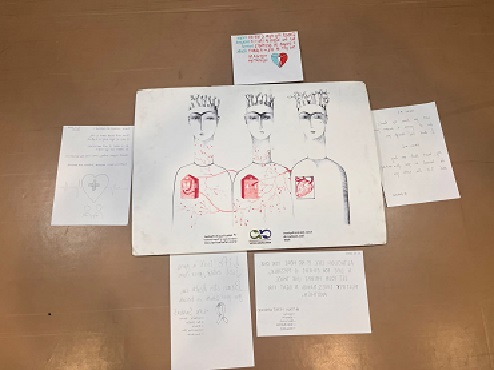
The creative segment of the workshop included a Haiku-writing activity using an Iranian art piece. Students were divided into five groups and asked to write short poems inspired by the artwork. All groups participated enthusiastically, and some teachers also joined by writing their own haikus.
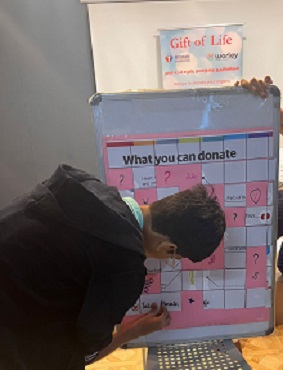
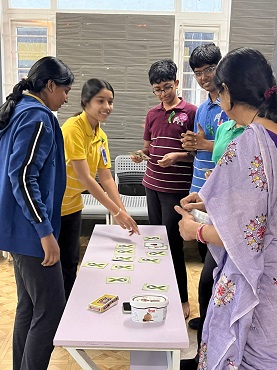
A short memory game based on organ donation followed, where each team was called up and asked to recall organ names and match them correctly. At the same time, an online quiz was conducted for the remaining students to assess their learning. The final activity was a puzzle challenge, in which students assembled puzzle pieces that revealed various organs and tissues that can be donated. This helped reinforce their understanding visually.
The workshop concluded with a vote of thanks delivered by a student representative, expressing gratitude to the MOHAN Foundation team for the informative and engaging session.































-ACT,-2011.gif)