The Frequently Asked Questions (FAQ) or Questions and Answers (Q&A) are some of the commonly asked questions about organ donation. For more information on organ donation, please write to [email protected] or call our Toll Free Helpline 18001037100.
In India, there are over 150,000 people currently in need of kidney transplants. The wait-list for patients with heart and liver failure is growing all the time as well
And each year, thousands of people die while waiting for a transplant, because no suitable donor can be found for them. The need for organ donors has never been greater. It can be hard to think about what's going to happen to your body after you die, let alone donating your organs and tissue. But being an organ donor is a generous and worthwhile decision that can be a lifesaver.
All people can be considered as being potential organ and tissue donors after death. However, the presence of active cancer, active HIV, active infection (for example, sepsis) or Intravenous (IV) drug use would absolutely rule out donation.
Patients who have Hepatitis C may still donate organs to a patient who also has Hepatitis C. The same is true for Hepatitis B — but this happens in very rare cases. Most cancer patients may donate corneas.
For organ recipients, a transplant often means a second chance at life. Vital organs such as the heart, pancreas, liver, kidneys and lungs can be transplanted to those whose organs are failing. It allows many recipients to return to a normal lifestyle. For others, a cornea or tissue transplant means the ability to see again or the recovery of mobility and freedom from pain.
The act of organ donation has the ability to comfort grieving families. It is always difficult to lose a loved one. Many grieving families of organ donors draw comfort from the fact that their loss may help to save or improve the lives of others.
Studies carried out to understand how a family’s heals have shown that the support from family members helps a person to overcome grief. The support of friends and religious and cultural beliefs also help donor families. Most of the donor families agreed to donate organs because they felt that it was the only positive outcome from their loss.
The impact of organ donation can vary, as it depends on the number of organs and tissues donated and the medical needs of recipients. However, a single organ donor has the potential to save or improve the lives of multiple individuals. Organs such as the heart, liver, kidneys, lungs, and others can each contribute to saving a life. Details of the organs and tissue are given below.
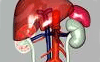
Currently, the following organs can be donated and transplanted:
Heart - A muscular organ that pumps blood through the body. Heart transplant is used to help those suffering from heart failure and babies born with heart defects.
Liver - A large organ that secretes bile and is active in the formation of certain blood proteins and in the metabolism of carbohydrates, fats, and proteins. Liver transplant is used to treat various conditions which cause liver failure, such as cirrhosis or liver cancer.
Kidneys - A pair of organs that maintain proper water and electrolyte balance, regulate acid-base concentration, and filter the blood of metabolic waste, which is excreted as urine. A kidney transplant may be recommended for those who have been diagnosed with end stage kidney disease.
Lungs - A pair of spongy organs that remove carbon dioxide from the blood and provide it with oxygen. Lung transplants are recommended for those with severe lung disease. Sometimes there is a combined heart and lung transplant.
Pancreas - A long, irregularly shaped gland which lies behind the stomach and aids in the digestion of proteins, carbohydrates, and fats. Pancreas transplant is indicated for those with insulin-dependent Type I diabetes.
Tissues that can be donated are:
Cornea - The outer curved transparent tissue covering the iris and pupil on the outside of the eye. Corneal transplant is a common procedure used to restore vision for those with eye diseases and corneal infections.
Skin - A tissue which protects the body from infection and injury. Skin transplants, referred to as skin grafts, are used to treat severe burns, extensive wounds and skin loss due to infection.
Heart Valves - Tissues that prevent the back flow of blood into the heart. Heart valve transplants are used to treat malfunctioning heart valves caused by infections, birth defects and aging. When an entire heart is not usable, heart valves are removed from the heart and are used for transplants .
Bones - Connective tissues that are dense, semi rigid, porous, and calcified forming the major portion of the skeleton of most vertebrates. Bone transplantation is done for reconstruction related to trauma, tumours, disease and fractures and to fill defects. For the recipient, it restores mobility, decreases pain, prevents amputation and collapse of bone.
Tendons - Tissues which attach muscles to bones. Tendon transplants are recommended for patients who have lost muscle function due to nerve injury or damage to tendons. It improves the recipient’s life and makes it pain free.
Either in the case of brain death, or when an individual suffers a cardiac arrest, individuals may share the gift of life with others through solid organ and tissue donation.
You may pledge to donate your organs by signing and carrying a Donor Card (available on MOHAN Foundation website). It's also important to tell your family that you want to be a donor. Even if there is documentation that a person was a designated donor, the consent of the family is essential for the organs or tissues to be donated. Hospitals seek consent from the next of kin before taking any action.
If you are not an adult (less than 18 years old), then your parents’ consent is required for organ donation. So if you want to become a donor, it’s important to tell them that you wish to donate. Children too are in need of organ transplants, and they usually need organs smaller than those an adult can provide.
The Transplantation of Human Organs Act (1994) and its Amendment (2011) allows the donation of organ and tissues for therapeutic purpose only. The Form 5 of the THO Rules 1995 is the donor card. And Forms 6 and/or 9 are consent forms that the next of kin has to sign before organs/tissues can be retrieved.
Doctors will only focus on saving your life — not somebody else's. You'll be seen by a doctor whose specialty most closely matches your illness. Whether you have pledged to donate your organs or not, there will be no difference in the medical treatment given to you. Organ donation can only occur after brain death has been declared by physicians who are not in any way connected with organ retrieval or the transplant teams. The doctor in charge of your care has nothing to do with transplantation.
In many western countries an adult is asked to make a choice if he/she wants to be a donor. In India, this final choice is left to the family. In case of brain death of a person carrying a donor card, the family still needs to approve the donation of organs. Family consent is essential.
No. The family of an organ or tissue donor is never responsible for costs related to donation. Your family will be only charged for the cost of all final efforts to save your life.
A road traffic accident is the most common cause of brain death in India. The victim is taken to the emergency ward and then into ICU. The cost of the treatment during these crucial times is charged to the patient. Once brain death has been certified and the patient’s family has given consent for organ donation, the costs incurred towards organ retrieval do not go to the patient.
The decision to use organs is based on various medical criteria, not age alone. It may be that a few organs are suitable for donation, while others are not. The doctors will decide at the time of death whether a person’s organs and tissues are suitable for transplantation.
A few guidelines with regard to age and organ donation:
The death of a loved one is a very traumatic time for a family, and knowing the wishes of the deceased makes it easier for them to decide about or accept organ donation. If your family is asked for consent, telling them about your decision to be a donor is the best way to ensure that your wishes are carried out.
The Transplantation of Human Organs Act (THOA), 1994, and its Amendment (2011) allow the donation of organ and tissues for therapeutic purpose only. The Act states that it is mandatory that the next of kin (parents, spouse etc) should agree to donate the organs of a brain dead family member. In order for a deceased organ donation to take place, specific forms are filled and signed. The Form 5 of the THOA Rules is the donor card. Forms 6 and 9 are consent forms that the next of kin has to sign before organs/tissues can be retrieved.
No. The Transplantation of Human Organs Act makes it ILLEGAL to buy or sell human organs and tissues. Violators are subject to fines and imprisonment.
You may feel that selling an organ is your only option and that after selling your organ yours debts will be settled and you can start afresh. But studies have shown that those who have sold their organs in exchange of money to lessen their debt have not done well at all.
| Offence under Section 19 | Penalty under THOA 1994 | Enhanced Penalty under Amendment 2011 |
|---|---|---|
| Whoever | ||
| 1. Makes or receives any payment for the supply of, or for an offer to supply, any human organ; | ||
| 2. Seeks to find a person willing to supply for payment any human organ; | ||
| 3. Offers to supply any human organ for payment. | ||
| 4. Initiates or negotiates any arrangement of payment related to organ donation. | Shall be punishable with imprisonment for a term which shall not be less than 2 years but which may extend to 7 years and fine amount of 10000 which may extend to 20000 rupees | Shall be punishable with imprisonment for a term which shall not be less than five years but which may extend to ten years and shall be liable to fine which shall not be less than twenty lakh rupees but may extend to one crore rupees |
| 5. Any advertisement related to inviting persons to supply or offering to supply for payment of any human organ. | ||
| 6. Preparation or submission of false documents related to organ donation. |
A registry is an essential part of understanding who and where potential donors are. A registry gives a planner enough information to devise strategies to get more public cooperation and commitment towards organ donation. Having a registry in place allows doctors and transplant coordinators to check if a brain dead person wished to donate and then approaching the family for consent becomes easier. It helps in saving crucial time in the process of organ donation.
Click here to know about Organ Failure
A person may be declared dead due to Cardiac Arrest or due to Brain Death.
In 1959 two French physicians first recognized Brain Death in patients being ventilated in the intensive care units and called it coma depasse (a state beyond coma). In 1968, brain death was defined as irreversible coma with the patient being totally unreceptive and unresponsive with absence of all cranial nerve reflexes and no spontaneous respiratory efforts when disconnected from the ventilator. Since then brain death has been accepted as a form of death.
The lower extension of the brain where it connects to the spinal cord is called the brain stem. Brainstem functions include those necessary for survival (breathing, digestion, heart rate, blood pressure) and for consciousness (being awake and alert).
Brain stem is the place of origin of the cranial nerves. It is the pathway between the peripheral nerves and the spinal cord to the higher centres of the brain.
The main causes of brain death are tumor in the brain, trauma, and intra-cerebral hemorrhage. The brain stem which is at the base of our brain stops functioning. This means that the person cannot breathe on his own and his heart will stop beating.
In the emergency room of a hospital the doctor on duty will treat the patient initially. Depending upon the criticality, the patient will then be shifted to the Intensive Care Unit (ICU) for treatment. In the ICU, neurologists, neurosurgeons and intensivists will take care of the patient.
In case of Brain death certification, two doctors from the hospital and two from the government approved panel will work together on conducting the tests for brain death. One of the doctors has to be a neurologist or neurosurgeon or intensivist.
The protocol of brain death declaration to proclaim death is the same - organ donation or no organ donation. Time of death is second apnoea test.
In many instances of brain death declaration, organ donation does not take place despite getting a consent from the family for organ donation.
There are a series of tests listed in the Transplantation of Human Organs Act that the doctors perform. These tests are basically to confirm that there is irreversible damage to the brain stem and involve cranial nerve testing and apnea testing.
The transplant coordinator has to be with the grieving family, make them comfortable and broach the subject of eye donation and later on solid organ donation.
If the family gives consent for organ retrieval, then the coordinator has to inform the Cadaver Transplant Programme office, coordinate with the ICU staff to maintain the patient and organize organ retrieval. The coordinator has to ensure that all paperwork is correctly done and that the family receives the body as soon as possible.
The police department has to be informed that a patient is brain dead if it is a medico- legal case, but the declaration of brain death is only done by a panel of doctors.
The doctor (Intensivist/ neurologist/neurosurgeon) who is treating the patient will explain to the family about brain death.
Solid organ donation (heart, lungs, liver, pancreas, kidneys) requires blood circulation to be maintained in these organs until retrieval. This is possible only in brain death where the functioning of these organs can be supported for some time.
No. In India, the allocation of organs to recipients on the waiting list is based on predetermined criteria which include date of registration and medical criteria.
The wealth, race, or gender of a person on the waiting list has no effect on when and whether a person will receive a donated organ. The Transplantation of Human Organs Act of 1994 makes it illegal to buy or sell human organs in India.
The conscience, character and competence of a good doctor are sufficient to allow us to discuss and make decisions regarding transplantation. The basic ethical principles commonly followed in medicine are also applied to various aspects of organ donation and transplantation.
These are a few of the main principles all doctors follow:
Doctors are concerned with the possible emotional/ financial exploitation of donors by families, recipients and from transplant hospitals. They are worried that, with the increasing demand of organs, the donor’s right to live with dignity may be abused.
Transplant hospitals have become more careful with a good system of screening in place, and an Authorization Committee of the Department of Health which vets all the applications. Today, LUR donations have become more transparent and streamlined.
A grief counselor's main duty is towards comforting the family and explaining to the family about the value of organ donation.
The following broad ethical principles are based on social work’s core values of service, social justice, dignity and worth of the person, importance of human relationships, integrity, and competence. All counselors aspire to reach out to the organ donor and their families through these principles.
Organ transplantation is undertaken only as a lifesaving treatment. It is best for the transplant team to decide whether to go ahead with a live organ donation, keeping in mind the two issues of 'non-maleficence' (doing no harm) for the donor, and 'beneficence' (doing good) for the recipient. Only the transplant team can decide whether the benefit to the patient is worth the risk faced by the donor. The transplant team takes into account the mortality and morbidity of the donor, though this can’t be accurately predicted.
Thus there is a need for an active and successful deceased organ donor programme.
Today’s fact is that there is a demand for solid organs way beyond the supply, so the prospect of getting life-saving organs any which way comes into being.
In many instances, live donations have become commercialized, especially in the LUR group. This is a worrying and controversial issue. Poor and needy people get exploited; they give their organ in exchange for money, not completely understanding the seriousness of the surgery and post-operative care that has to taken. It is seen that patients from the developed world usually come to developing countries for a transplant.
In Tamil Nadu, the Tamil Nadu Network for Organ Sharing (TNOS) maintains and operates a state based computerized waiting list of patients with organ failure.
The wait list is based various criteria such as time of registration, medical urgency and location. This system matches each wait-listed patient against a donated organ to see which patient is the best match based on factors such as body size, weight, and blood type of the donor and recipient, how sick the patient is, how long the patient has been waiting for a transplant.
Each private hospital also has its own wait list based on independent hospital criteria and this is added on to the state list. Each transplant centre/ hospital has a turn at the common pool of organs.
Directed donation is a request made by a deceased donor family to transplant an organ to a specific family member.
A decision to carry out directed donation is taken on a case-to-case basis by the Authorization committee after they verify the credentials and medical suitability of the specified recipient.
The Government has specified that a panel of doctors will certify brain death and not a single doctor.
The panel consists of:
These four doctors carry out the tests together to certify brain death.
A person legally in possession of the deceased person can sign the consent form. This is usually done by a parent, spouse, son/daughter or brother/sister.
By signing a consent form the family says that they do not have any objection to the removal of organs from the body of their loved one. It is a legal document. This form is kept with the hospital.
When an accident victim is brought to a hospital for emergency treatment, then an FIR has to be filed by the family in the nearest police station. Such cases are usually called medico-legal cases. Also, any medical treatment (for suicide, assault, poisoning or fall) which needs that the police should be notified becomes a medico-legal case.
The police will conduct an inquest about the incident and take charge of the case. A forensic doctor will examine the patient and will allow or deny organ retrieval.
Confirmatory tests for brain death have to be done twice with an interval of six hours between the tests. Once consent for organ donation has been obtained, coordinating the process of organ retrieval takes time.
Organ retrieval from deceased donors involves many hospitals and transplant teams to ensure that the organs donated match as perfectly as possible with the recipient. If it is a medico-legal case, a post-mortem has to be performed and this involves both the police as well as the Forensic Medicine department.
The family member who requires a kidney should be registered with a kidney transplant hospital. The doctors there will advise you on how to go ahead. Your blood will be tested (HLA typing) to establish the degree of HLA/tissue compatibility between you and the recipient since this will influence the outcome of the transplant. You should also be in good physical and emotional health.
You will have a thorough medical, surgical and psychological assessment to establish that you are fit and healthy to donate. A number of people who wish to donate find that they are not able to do so because health problems are discovered through the assessment process. Members of the healthcare team involved in your assessment include physicians, surgeons, transplant co-ordinators and social workers.
The assessment in general will take approximately 6 to 7 days. There is variation depending upon where you live and what tests you may require. Wherever possible, the assessment is tailored to your needs and commitments.
Report of submission of false records and other misdemeanours should be sent to the Appropriate Authority in the State Government’s Department of Health. The Appropriate Authority can file a criminal case against the party.
A hospital, authorization committee, or a person can approach the appropriate authority with the information. The 2011 Amendment of the THO Act gives the following offenses:
| Offence ( THO Act 2011 Amendment) | Imprisonment | Fine |
| Removal of organs without authority | 10 years | Rs. 20 Lakh |
| Removal of organs without authority - Penalty for RMP | 1st offence: de-registration for 3 years | 2nd offence: permanent de-registration |
| Commercial dealing in organs, falsification of documents | 5 – 10 years | Rs. 20 Lakh – 1 crore |
| Any violation of THOA | 5 years | Rs. 20 Lakh |
Facebook has helped people to connect and stay in touch with old friends, colleagues and far-flung relatives. A person may make an appeal or send an SOS message to his/her friends on facebook.
The patient will have to convince the transplant team of the closeness of the friendship and readiness of the friend to donate the organ. Both the recipient and donor also have to face the Authorisation Committee to get approval for a Live Unrelated donation.
By pledging your kidneys in a donor card an individual can express his/her wish to donate the organs after death. It is necessary to inform your family about your wish to donate since it is only after consent from the family is obtained that the kidneys can be retrieved.
You have to go to a government approved transplant hospital, they will guide you on how to register as a kidney transplant patient. If the hospital does cadaver kidney donation, then you have to pay Rs.1000 as registration fee to the Cadaver Transplant Programme, TN, to be listed on the Tamil Nadu waiting list. The hospital will guide you about this.
No, MOHAN Foundation will not be able to find a kidney for you but we will guide you on how to register in a hospital and be put on the cadaver kidney waiting list.
THO 2011 Amendment has increased the punishment. Commercial dealing in organs, falsification of documents: 5 – 10 years imprisonment and Rs. 20 Lakh – 1 crore in penalty.
The family member who requires a kidney should be registered with a kidney transplant hospital. The doctors there will advise you on how to go ahead. As a donor, your blood will be tested (HLA typing) to establish that you are related to the recipient and are compatible. You should be in good physical and emotional health.
You will have a thorough medical, surgical and psychological assessment to establish that you are fit and healthy to donate. A number of people who wish to donate find that they are not able to do so because health problems are discovered through the assessment process.
There are many avenues for you to raise your concerns. First of all you must try to convince your family by speaking to a family member who understands you. You can also approach the treating doctor or transplant surgeon and speak to him about your reservations. You can speak to the transplant coordinator/counselor and psychiatrist at the transplant hospital.
Approach a government approved transplant hospital, register in that hospital on the transplant waiting list. In case you want to be able to register with the deceased donor program, the hospital will assist you in registering under the Tamil Nadu Government’s Cadaver Transplant Program (CTP) on payment of Rs 1000.00 as demand draft to CTP. Once you are registered you will receive a waitlist number and you can check your status online.
In Tamil Nadu, you cannot register in more than one hospital. You can shift from one hospital to another within the state and retain the same position in the waitlist. You can register as a kidney recipient in more than one state.
There are three types of kidney donation.
LIVE RELATED DONATION: Living donation takes place when a living person donates an organ (or part of an organ) for transplantation to another person. The living donor can be a family member, such as a parent, child, brother or sister, grandparent or grandchild (living related donation).
LIVE UNRELATED DONATION: Living donation can also come from someone who is emotionally related to the recipient, such as a good friend, a relative, a neighbour or an in-law (living unrelated donation).
DECEASED ORGAN DONATION: The patient has to register in a hospital that does kidney transplants. The patient will be put on a kidney waitlist. As and when a kidney from an appropriate deceased donor (brain death) is available, the patient will be intimated.
The hospital where the transplant will take place will have a qualified transplant coordinator who will guide the patient in the process.

























































-ACT,-2011.gif)